
Buying & Selling Guides
What Happens After You Accept an Offer on Your Home?
A seller-focused guide to the work that happens between accepting an offer and completing a Southern California home sale.

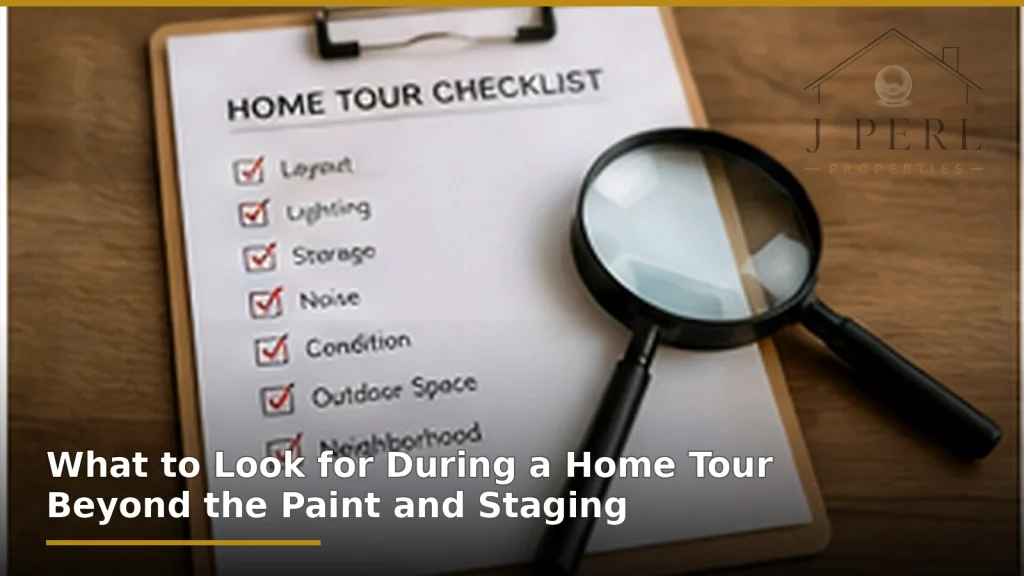
Learn how to look beyond fresh paint and attractive staging so you can evaluate whether a property truly fits your needs and budget.
A well-presented home is designed to create an emotional response. Furniture is arranged to improve flow, lights are turned on, counters are cleared, and distracting personal items are removed. Those steps are useful for showing a property, but they can also make it easy to overlook issues that will matter after you move in.
A home tour is not a substitute for a professional inspection. It is your opportunity to decide whether the property deserves deeper due diligence. Use the time to evaluate function, condition, surroundings, and ownership responsibilities.
Arrive early and observe the immediate area. Look at traffic, street parking, neighboring property conditions, slope, drainage, overhead lines, nearby commercial uses, and general noise. Visit at different times when possible. A quiet midday street may feel different during school drop-off, commuting hours, weekends, or evenings.
Consider the route to work, shopping, medical care, recreation, and other destinations important to you. Real estate professionals can provide property and market information, but buyers should independently investigate the location and make decisions based on their own priorities.
Water management affects foundations, landscaping, exterior materials, and indoor conditions. During the exterior walk, look for:
Dry weather does not reveal every drainage issue. Ask about prior water intrusion and review disclosures and inspection findings carefully.
You do not need to climb onto the roof during a showing. From the ground, note missing or damaged materials, uneven rooflines, debris accumulation, rusted flashing, deteriorated fascia, and evidence of patched areas. Look at exterior paint, stucco, siding, windows, doors, decks, balconies, railings, and fences.
Age matters, but condition and installation quality matter too. Ask when major components were replaced and whether documentation or permits are available. A professional inspector or qualified contractor should evaluate concerns.
Walk through the home as though you already live there. Imagine bringing in groceries, doing laundry, hosting guests, working from home, caring for children or pets, and moving furniture.
Ask:
A large room can be difficult to furnish if it has too many doorways or little usable wall space. An unconventional layout may be perfect for one buyer and frustrating for another.
Turn off some lights and observe natural light. Note window direction, privacy, glare, and whether landscaping or neighboring structures block sunlight. Rooms that look bright in professional photography may feel different in person.
Notice temperature differences between rooms, weak airflow, persistent humidity, or odors masked by fragrances. These observations do not diagnose a problem, but they can identify questions for the inspector or HVAC professional.
Water damage may appear as stains, bubbling paint, swollen trim, damaged flooring, musty odors, patched drywall, or discoloration in cabinets. Inspect visible areas around sinks, tubs, showers, toilets, windows, ceilings, and exterior doors.
Fresh paint is not proof that a defect was concealed. Sellers often repaint for ordinary presentation. However, isolated new paint or repairs should prompt reasonable questions about what was corrected and whether the source was addressed.
During a normal showing, you can note the location and apparent age of the electrical panel, the number and placement of outlets, visible extension-cord dependence, flickering lights, and unusual exposed wiring. Do not remove panel covers or perform unsafe testing.
Run faucets when permitted. Observe water pressure, drainage speed, hot-water response, fixture condition, cabinet interiors, and visible piping. Flush toilets and listen for continuous running. These simple observations are not a plumbing inspection, but they help you identify concerns for follow-up.
Staging furniture and décor generally do not remain unless specifically included in the contract. Ask which appliances, fixtures, window treatments, outdoor items, smart-home devices, security equipment, and mounted televisions are included or excluded.
Do not rely on assumptions. If an item matters, it should be clearly addressed in the offer and final agreement.
Open closets and cabinets when appropriate and with permission. Look at pantry space, linen storage, garage capacity, utility areas, and outdoor storage. A staged home may use minimal belongings, while your household may require much more room.
Measure important furniture, garage dimensions, refrigerator openings, and other tight spaces before removing contractual protections. Visual estimates can be misleading.
Stand quietly in each bedroom and outdoor area. Listen for traffic, aircraft, neighbors, mechanical equipment, barking dogs, common-area activity, or nearby businesses. Look through windows to understand sightlines.
Noise can change by time of day, weather, and open or closed windows. If it is an important concern, return to the area more than once and conduct your own investigation.
A pool, converted garage, room addition, detached office, balcony, or elaborate outdoor space can add value and enjoyment. It can also add maintenance, insurance, safety, permitting, and repair considerations.
Ask for available records and permits, but understand that permit information may require independent verification with the appropriate public agency. A general home inspector may also recommend specialists for pools, structural conditions, roofing, chimneys, sewer lines, or other systems.
The CFPB explains that a home inspection and an appraisal serve different purposes. An inspection helps a buyer understand condition, while an appraisal is generally used by the lender to evaluate value and collateral.1 Attend the inspection when possible so you can see important findings and ask the inspector to explain maintenance and safety concerns.
Your contract determines your inspection rights, deadlines, and available responses. Do not delay scheduling or assume you can investigate later.
After each tour, rate the property in the same categories:
Take notes immediately. After several showings, details blend together. A consistent system helps you compare homes objectively while still recognizing the importance of how a home feels.
A beautiful home can still be the wrong fit, and a property with dated finishes can be an excellent opportunity if the layout, location, and major systems align with your needs.
J Perl Properties can help you evaluate homes with a practical eye, including unique layouts, pool properties, and ownership considerations that deserve a closer look.
Important: This article is general educational information and is not an inspection, engineering, legal, environmental, insurance, or contractor opinion. Retain qualified professionals for property-specific advice.

A seller-focused guide to the work that happens between accepting an offer and completing a Southern California home sale.
A decision framework for sellers weighing repairs, credits, price adjustments, and an as-is marketing strategy.
A practical step-by-step explanation of what buyers can expect before, during, and after making an offer on a Southern California home.

