Rentals & Property Management
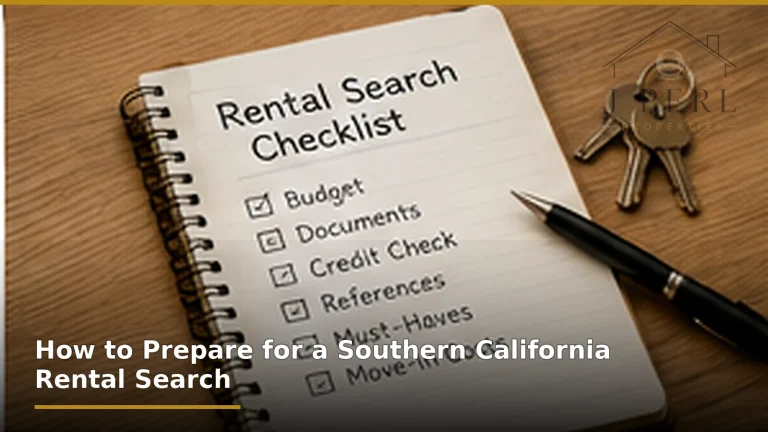
How to Prepare for a Southern California Rental Search
A step-by-step plan for renters who want to move quickly without overlooking costs, lease terms, property condition, or listing verification.


California security-deposit rules changed recently. Here is what renters and rental-property owners should know about limits and documentation.
Security deposits are one of the most common sources of confusion in a California rental transaction. The rules have changed in recent years, and both renters and property owners benefit from using current information rather than relying on what was common several years ago.
As of October 2026, California generally limits a residential security deposit to one month’s rent, with a narrow exception that allows certain small landlords to charge up to two months’ rent in qualifying situations.
California Civil Code section 1950.5 generally limits the security a landlord may demand or receive to an amount equal to one month’s rent, in addition to first month’s rent paid on or before initial occupancy.
The current rule applies to both furnished and unfurnished residential units.
The California Department of Real Estate explains that labels such as “pet deposit,” “key fee,” “cleaning fee,” or “last month’s rent” do not necessarily create separate buckets outside the security-deposit limit. Amounts that function as security can be treated as part of the total security deposit under the statute.
A qualifying small landlord can generally charge up to two months’ rent as security if the statutory requirements are met.
Civil Code section 1950.5 describes the exception as applying when the landlord is a natural person, or an LLC in which all members are natural persons, and the landlord owns no more than two residential rental properties that collectively contain no more than four dwelling units offered for rent.
The statute also addresses certain family trusts in the definition.
Importantly, the two-month exception does not apply when the prospective tenant is a service member as defined by California law.
Property owners should not assume that owning “only a few units” automatically qualifies. The ownership structure and total property/unit count matter.
The security-deposit cap is separate from first month’s rent.
Application screening fees are governed by separate rules and should not simply be labeled as part of the security deposit.
Renters should ask for the complete move-in amount in writing before sending funds.
Good documentation protects both sides.
The DRE’s 2026 landlord/tenant guide advises renters to inspect the unit, document existing conditions, and use an inventory checklist. Photographs can help establish what was already present before move-in.
For tenancies beginning on or after July 1, 2025, California law requires landlords to take photographs of the rental unit immediately before or at the beginning of the tenancy to document its condition, according to the DRE guide.
Renters should consider taking their own dated photographs as well.
Subject to the statute, a landlord may make lawful deductions for certain costs such as unpaid rent when permitted, repair of tenant-caused damage beyond ordinary wear and tear, cleaning necessary to return the unit to the same level of cleanliness it had at the beginning of the tenancy, and certain restoration of landlord-owned personal property when allowed by the rental agreement.
A security deposit cannot properly be used to charge a tenant for ordinary wear and tear.
The difference between damage and wear can be fact-specific. Documentation from move-in and move-out can make that discussion much clearer.
California tenants generally have a right to request an initial inspection before moving out, subject to the statutory process and exceptions.
The purpose is to identify conditions that could result in deductions so the tenant may have an opportunity to address them before the tenancy ends.
The DRE guide explains that this inspection generally takes place during the final two weeks of the tenancy and involves specific notice and scheduling requirements.
The DRE’s 2026 guide states that beginning April 1, 2025, landlords must take photographs of the rental unit within a reasonable time after possession is returned and before repairs or cleaning for which deductions will be made. Landlords must also photograph the unit after those repairs or cleaning are completed.
These requirements make organized turnover documentation even more important for property owners and managers.
The California Courts Self-Help Guide explains that a landlord generally must return the remaining security deposit and provide required information about deductions within 21 days after the tenant moves out, subject to the statute.
If a landlord retains a deposit in bad faith, the tenant may seek additional damages under California law.
Property owners should use a repeatable move-out process so receipts, invoices, photographs, and accounting are gathered promptly.
The DRE’s 2026 landlord/tenant guide notes an additional rule effective January 1, 2026 (AB 414): a landlord who receives a security deposit by digital payment must generally return it by digital payment unless the landlord and tenant agree to a different method. Owners should review the current text of Civil Code section 1950.5 for the exact conditions, including how electronic rent payments during the tenancy are treated.
This is a good example of why owners should update procedures rather than reuse an old turnover checklist indefinitely.
Potential upfront costs can include first month’s rent, lawful security deposit, application screening fee when lawfully charged, moving costs, utility setup, renter’s insurance if required or selected, and parking or other recurring charges clearly stated in the rental arrangement.
California rental law is not the only layer that may apply. Cities and counties can have additional rules involving rent stabilization, registration, notices, relocation, and other matters.
Los Angeles County includes multiple jurisdictions with different local rules. Owners and renters should determine which law applies to the specific property.
A clear move-in and move-out process reduces disagreements and helps owners manage consistently.
Jeremy’s hands-on experience managing a 14-unit apartment complex gives J Perl Properties practical familiarity with the importance of documentation, maintenance coordination, and repeatable property-management systems.
Looking for rental assistance or property-management support in Southern California? Contact J Perl Properties to discuss your needs.

Important: This article is general information, not legal advice. California and local landlord-tenant laws change and can be fact-specific. Owners and renters should review current law and consult qualified legal counsel when needed.
A step-by-step plan for renters who want to move quickly without overlooking costs, lease terms, property condition, or listing verification.
A practical comparison of four common rental types so renters can choose the property that best supports their budget and daily routines.
A California-focused checklist of practical questions renters should resolve in writing before committing to a rental property.